Famous People of WW2

We are not going to put the name of leaders here like Adolph Hitler, Benito Mussolini etc.
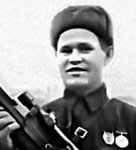
vasily-zaitsev

Vasily Zaytsev (1915 – 1991) Russian sniper who fought during the desperate Battle of Stalingrad. Zaytsev killed 225 enemy soldiers during the Battle of Stalingrad
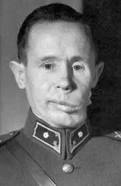
Simo “Simuna” Häyhä, nicknamed “White Death” by the Red Army, was a Finnish sniper. Using a Finnish-produced M/28-30 rifle and a Suomi KP/-31, he reportedly killed 505 men during the 1939–40 Winter War, the highest recorded number of sniper kills in any major war.
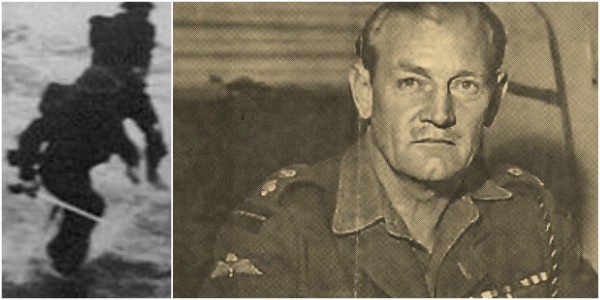
Image result for mad jack

John Malcolm Thorpe Fleming Churchill, DSO & Bar, MC & Bar, was a British Army officer who fought throughout the Second World War armed with a longbow, bagpipes, and a basket-hilted Scottish broadsword.
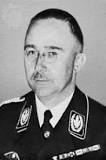
Heinrich Luitpold Himmler was Reichsführer of the Schutzstaffel, and a leading member of the Nazi Party of Germany. Himmler was one of the most powerful men in Nazi Germany and among those most directly responsible for the Holocaust.
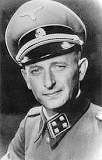
Otto Adolf Eichmann was a German-Austrian Nazi SS-Obersturmbannführer and one of the major organizers of the Holocaust.
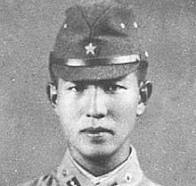
Hirō “Hiroo” Onoda was an Imperial Japanese Army intelligence officer who fought in World War II and was a Japanese holdout who did not surrender at war’s end in August 1945.
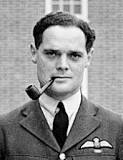

Group Captain Sir Douglas Robert Steuart Bader, CBE, DSO & Bar, DFC & Bar, DL, FRAeS was a Royal Air Force flying ace during the Second World War. He was credited with 22 aerial victories, four shared victories, six probables, one shared probable and 11 enemy aircraft damaged.
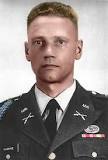
Lauri Allan Törni (28 May 1919 – 18 October 1965), later known as Larry Alan Thorne, was a Finnish–American soldier who fought under three flags: as a Finnish Army Second Lieutenant of the Fourth Independent Jäger Infantry Battalion against the Soviets in the Winter War and the Soviet-Finnish sub-theater of World War IIknown as the Continuation War; as a German Army Captain (under the alias Larry Lane) of the Finnish Volunteer Battalion of the Waffen-SS when he fought the Soviets on the Eastern Front in World War II; and as a United States Army Captain (under the alias “Larry Thorne”) when he served in the U.S. Army Special Forces in the Vietnam War. Törni died in a helicopter crash during the Vietnam War and he was promoted to rank of Major posthumously. His remains were located three decades later and then buried in Arlington National Cemetery.
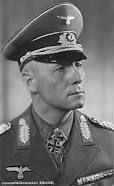
Johannes Erwin Eugen Rommel was a German general and military theorist. Popularly known as the Desert Fox, he served as field marshal in the Wehrmacht of Nazi Germany during World War II, as well as serving in the Reichswehr of the Weimar Republic, and the army of Imperial Germany.
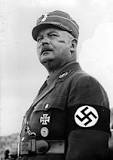
Ernst Julius Günther Röhm was a German military officer and an early member of the Nazi Party. As one of the members of its predecessor, the German Workers’ Party, he was a close friend and early ally of Adolf Hitler and a co-founder of the Sturmabteilung, the Nazi Party’s militia, and later was its commander.
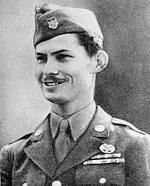
Desmond Thomas Doss was a United States Army corporal who served as a combat medic with an infantry company in World War II. He was twice awarded the Bronze Star Medal for actions in Guam and the Philippines.
Doss further distinguished himself in the Battle of Okinawa by saving 75 men .
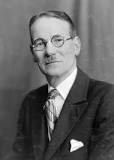
Robert Semple was a union leader and later Minister of Public Works for the first Labour Government of New Zealand. He made the Bob Semple Tank during World war 2.
Pictures in WW2

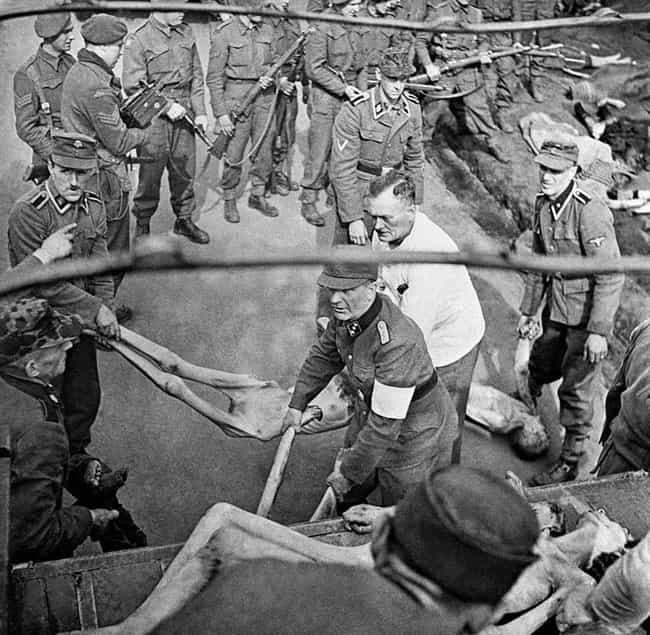
SS Prison Guards Being Forced ... is listed (or ranked) 1 on the list 36 Rare Photos From World War II
SS guards being forced to load their victims onto trucks for burial
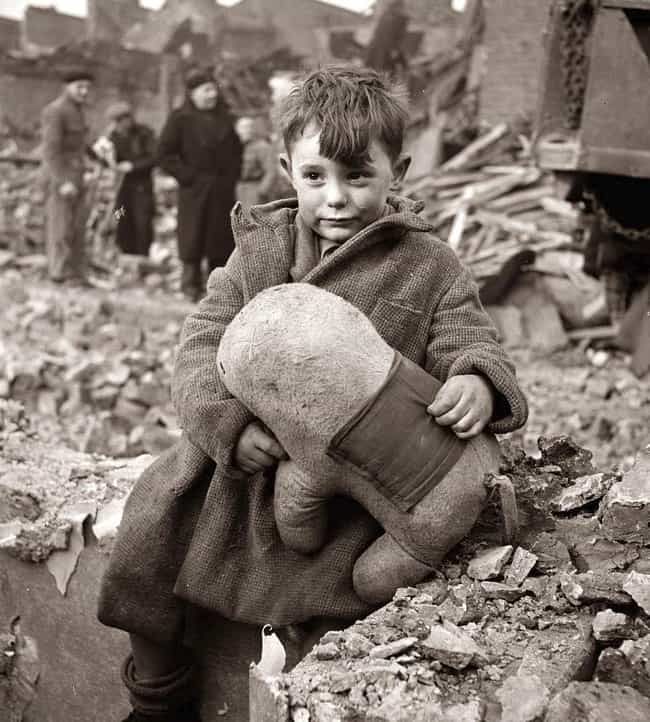
An Abandoned Boy Sitting Amid ... is listed (or ranked) 2 on the list 36 Rare Photos From World War II

An Abandoned Boy Sitting Amid the Ruins of His London Home
A POW Stares Defiantly at Hitl is listed (or ranked) 6 on the list 36 Rare Photos From World War II

A POW Stares Defiantly at Hitler’s Right Hand Man

Victims of the Dresden Firebom is listed (or ranked) 8 on the list 36 Rare Photos From World War II

Victims of the Dresden Firebombings Waiting to Be Buried
A German Soldier Offering Food is listed (or ranked) 10 on the list 36 Rare Photos From World War II

A German Soldier Offering Food to a Starving Mother and Child
German Prisoners Reacting to F is listed (or ranked) 11 on the list 36 Rare Photos From World War II

German Prisoners Reacting to Footage of Concentration Camps
A German Soldier Sharing Bread is listed (or ranked) 12 on the list 36 Rare Photos From World War II

A German Soldier Sharing Bread with Russian Boy
A Soviet Spy Laughing in the F is listed (or ranked) 13 on the list 36 Rare Photos From World War II

A Soviet Spy Laughing in the Face of Death
Japanesse Soldiers Using Sikh  is listed (or ranked) 14 on the list 36 Rare Photos From World War II

Japanesse Soldiers Using Sikh POWs for Target Practice
A US Soldier Offering Help to  is listed (or ranked) 15 on the list 36 Rare Photos From World War II

A US Soldier Offering Help to a Japanese Woman Hiding in a Cave
Two Soldiers with the Best Eas is listed (or ranked) 19 on the list 36 Rare Photos From World War II

Two Soldiers with the Best Easter Present Ever
American Tank Crews Talking to is listed (or ranked) 20 on the list 36 Rare Photos From World War II

American Tank Crews Talking to Man Liberated from the Camp of Santo Tomas, Philippines
Allied Soldiers Mocking Hitler is listed (or ranked) 22 on the list 36 Rare Photos From World War II

Allied Soldiers Mocking Hitler from His Famous Balcony
Aleksandra Samusenko, a Female is listed (or ranked) 24 on the list 36 Rare Photos From World War II

Aleksandra Samusenko, a Female Tank Commander
The Soviet Flag Being Raised O is listed (or ranked) 25 on the list 36 Rare Photos From World War II

The Soviet Flag Being Raised Over Berlin
The Last Known Picture of Hitl is listed (or ranked) 30 on the list 36 Rare Photos From World War II

The Last Known Picture of Hitler
One of the First Photos of Hit is listed (or ranked) 34 on the list 36 Rare Photos From World War II

One of the First Photos of Hitler’s Abandoned Bunker
A German Soldier Posing His Do is listed (or ranked) 35 on the list 36 Rare Photos From World War II

A German Soldier Posing His Dog in 1940

Battles in WW2

Attack on Pearl Harbor
The attack on Pearl Harbor was a surprise military strike by the Imperial Japanese Navy Air Service upon the United States against the naval base at Pearl Harbor in Honolulu, Hawaii on Sunday morning, December 7, 1941. The attack led to the United States’ formal entry into World War II the next day.

Battle of the Bulge
The Battle of the Bulge, also known as the Ardennes Counteroffensive, took place from 16 December 1944 to 25 January 1945, and was the last major German offensive campaign on the Western Front during World War II.

Invasion of Normandy The Western Allies of World War II launched the largest amphibious invasion in history when they assaulted Normandy, located on the northern coast of France, on 6 June 1944. The invaders were able to establish a beachhead as part of Operation Overlord after a successful “D-Day,” the first day of the invasion.

Battle of Okinawa The Battle of Okinawa, codenamed Operation Iceberg, was a major battle of the Pacific War fought on the island of Okinawa by United States Marine and Army forces against the Imperial Japanese Army.

Battle of Stalingrad The Battle of Stalingrad was the largest confrontation of World War II, in which Germany and its allies fought the Soviet Union for control of the city of Stalingrad in Southern Russia.

Battle of Berlin The Battle of Berlin, designated the Berlin Strategic Offensive Operation by the Soviet Union, and also known as the Fall of Berlin, was one of the last major offensives of the European theatre of World War II.

Battle of Iwo JimaThe Battle of Iwo Jima was a major battle in which the United States Marine Corps landed on and eventually captured the island of Iwo Jima from the Imperial Japanese Army during World War II.

Siege of Leningrad
The Siege of Leningrad was a prolonged military blockade undertaken from the south by the Army Group North of Nazi Germany against the Soviet city of Leningrad on the Eastern Front in World War II.

Battle of Peleliu
The Battle of Peleliu, codenamed Operation Stalemate II by the United States military, was fought between the U.S. and Japan during the Mariana and Palau Campaign of World War II, from September to November 1944, on the island of Peleliu.

Leaders of the major countries in WW2

Some of these leaders were clearly the aggressors, while others led the war against aggression. Some leaders succeeded, while others failed to stand against stronger powers. Some leaders were caught in the middle between stronger countries and were forced to take a side, while others were able to remain neutral and save their nations from the war.

The Agressor leaders are Adolf Hitler, Benito Mussolini , and General Hideki Tojo

Adolf Hitler – Nazi dictator of Germany (1933-45), planned and started World War. Benito Mussolini, was the prime minister of Italy (1922-1943). A former journalist, he went to politics and formed the Fascist party, whose ideology, Fascism, called for a one-party state, total obedience, patriotic nationalism, and aggressive militarism. General Hideki Tojo – Prime minister of Japan (October 1941 – July 1944). With a long militarist tradition, Japan became extremely militarist and aggressive in the 1930s and was practically governed by military leaders. Tojo, an aggressive army General, became minister of war in July 1941 and prime minister in October 1941.

The Defender leaders are Winston Churchill, Joseph Stalin, and Franklin Delano Roosevelt

Winston Churchill kept warning of the Nazi danger in pre-war years. He was elected prime minister of Great Britain after the total collapse of the appeasement policy of his predecessor Neville Chamberlain. Chamberlain failed to understand that aggressors like Hitler can not be appeased. Churchill became prime minister on May 10, 1940, at the same day when the German Blitzkrieg invasion of France began.

Joseph Stalin was the very brutal Communist dictator of Russia (1928-1953). In the years before World War 2 Stalin murdered or imprisoned almost all of Russia’s senior military officers, and millions of other Russian citizens, in a paranoid and unprecedented wave of political terror. This clearly weakened Russia and further encouraged Hitler to attack it. The pre-war pacifist strategy, military weakness, and anti-Communism of Britain and France led Stalin in August 1939 to decide that making a deal with Hitler is a better way to protect Russia from Hitler than making an alliance with Britain and France against him.

Franklin Delano Roosevelt, president of the United States of America (1933-1945) initially followed a very strong political demand to remain neutral and isolate the country from foreign wars, but he realized that the Nazi aggression was a global threat and the total opposite to the values of democracy and freedom, and persuaded the Congress to allow selling weapons to Britain and France, later declaring that the US will become the “arsenal of democracy”.

WW2-Introduction

When WW2 began? World War Two in Europe began on 3rd September 1939, when the Prime Minister of Britain, Neville Chamberlain, declared war on Germany. It involved many of the world’s countries.

Why WW2 started? After World War One ended in 1918, Germany had to give up land and was banned from having armed forces.In 1933 the German people voted for a leader named Adolf Hitler, who led a political party in Germany called the National Socialists or Nazis. Hitler promised to make his country great again and quickly began to arm Germany again and to seize land from other countries.Shortly before 5am on Friday 1st September, 1939, German forces stormed the Polish frontier. Tanks and motorised troops raced into the country over ground, supported by Stuka dive bombers overhead. A total of 1.25 million Germans soldiers swept into Poland

The World War II Battle of Guadalcanal was the first major offensive and a decisive victory for the Allies in the Pacific theater. With Japanese troops stationed in this section of the Solomon Islands, U.S. marines launched a surprise attack in August 1942 and took control of an air base under construction

Axis Powers (signers of the Tripartite Treaty)

  • Germany
  • Italy
  • Japan
  • Co-signers of the Tripartite Treaty
  • Bulgaria (March 1st, 1941)
  • Hungary (November 20th, 1940)
  • Romania (November 23rd, 1940)
  • Slovakia(1) (November 24th, 1940)

The Allies

  • Australia
  • Belgium
  • Brazil
  • Canada
  • China
  • Czechoslovakia
  • Denmark
  • Estonia
  • France
  • Greece
  • India
  • Latvia
  • Lithuania
  • Malta
  • The Netherlands
  • New Zealand
  • Norway
  • Poland
  • South Africa
  • United Kingdom
  • United States
  • USSR
  • Yugoslavia

and others.